If you’ve ever stared at a blank screen thinking about Headline Ideas or Ideas in General to write about.
“I know I want to write something… I just don’t know what.”
You’re not alone. Every writer experiences it.
The difference between experienced content creators and beginners isn’t that experienced writers have more ideas.
It’s that they know where to look. One of the biggest myths in content creation is that good ideas arrive as moments of inspiration. In reality, great ideas are usually discovered, not invented.
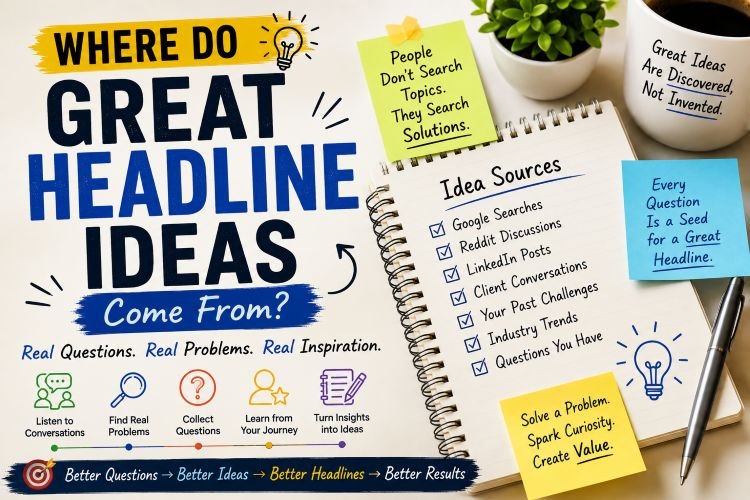
Think about it. Every day, millions of people type questions into Google. They ask ChatGPT. They scroll through LinkedIn. They read Reddit discussions. They complain about problems at work. They ask colleagues for advice.
Hidden inside those conversations are thousands of article ideas waiting to be written. Your job isn’t to invent questions. Your job is to answer them better than anyone else.
Stop Looking for Topics. Start Looking for Problems.
Many freelancers begin by asking:
“What should I write about?”
A better question is:
“What problem can I help someone solve today?”
People rarely search Google because they’re bored. They search because they’re trying to achieve something or overcome something.
For example, nobody wakes up and searches: “Project Management.”
Instead, they search for things like:
- Why is my project delayed?
- How do I manage difficult stakeholders?
- How do I estimate project timelines?
- How do I write a project plan?
- How do I stop scope creep?
Notice the difference? People search for solutions, not subjects. That’s where valuable content begins.
The Best Headlines Start With Real Questions
Imagine you’re sitting in a coffee shop. At the next table, you overhear someone say,
“I sent ten freelance proposals this week and didn’t get a single reply.”
That’s not just a conversation. That’s an article waiting to be written.
Possible headlines include:
- Why Clients Ignore Most Freelance Proposals
- Five Reasons Your Proposal Isn’t Getting Replies
- How to Write Proposals Clients Actually Read
The article didn’t begin with SEO. It began with a real human problem.
The more closely your headlines reflect the questions people are already asking, the more naturally they’ll attract attention.
Become a Collector of Questions
One habit has transformed my own writing more than almost anything else.
I collect questions. Not article ideas. Questions. Whenever I hear someone ask an interesting question, I write it down.
Over time, that list becomes a goldmine.
Imagine maintaining a notebook like this:
| Question Someone Asked | Possible Article |
|---|---|
| How do I find my first freelance client? | A Beginner’s Roadmap to Finding Your First Client |
| What should I charge? | A Practical Guide to Freelance Pricing |
| Why don’t clients reply? | The Real Reasons Freelance Proposals Get Ignored |
| Do I need a portfolio? | How to Build a Portfolio Before You Have Clients |
| Can AI replace freelancers? | How Freelancers Can Thrive in the Age of AI |
Notice something interesting. Every article begins with a genuine question. That’s no coincidence. Good content answers real curiosity.
Listen More Than You Write
Great writers are often great listeners.
Pay attention when people say things like:
- “I wish someone explained…”
- “I don’t understand…”
- “Why does everyone say…”
- “I’m struggling with…”
- “Can anyone recommend…”
Those phrases often contain the seed of your next article.
Clients, colleagues, friends, online communities, and even family members can become unexpected sources of inspiration.
The world is constantly telling you what people want to know. You just have to listen.
Your Past Self Is One of Your Best Readers
Here’s an exercise I recommend to every freelancer. Think back five years.
- What confused you then?
- What mistake did you eventually overcome?
- What lesson do you wish someone had taught you earlier?
Those memories are incredibly valuable because someone else is facing those same challenges today.
For me, some examples might be:
- I didn’t know how to estimate project timelines confidently.
- I struggled to say “no” to unrealistic client requests.
- I underestimated the importance of communication.
- I thought technical skills alone would bring opportunities.
Each of those lessons could become an article that saves another freelancer months or even years of frustration.
Your experience is not just your history. It’s someone else’s shortcut.
Don’t Chase Trends. Chase Timeless Questions.
Trending topics can bring short bursts of traffic. Evergreen topics build lasting value.
For example: Trending
The Latest AI Tool Everyone Is Talking About. This may become outdated in a few months.
Now compare it with: Evergreen
How Freelancers Can Use AI Without Losing Their Personal Voice. The tools may change. The underlying challenge remains.
When possible, invest more time in answering questions that people will still be asking two or five years from now. That’s how you build articles that continue attracting readers long after they’re published.
Great Headlines Often Begin With Observation
Sometimes inspiration doesn’t come from research. It comes from paying attention.
For example, imagine you notice three different freelancers introducing themselves like this:
“I’m passionate about helping businesses grow.”
It’s a familiar phrase. But it’s also vague.
That observation might inspire an article titled:
Why “I’m Passionate” Isn’t Enough to Win Freelance Clients
The article exists because you noticed a pattern. The best writers aren’t just observers of words. They’re observers of people.
AI Is a Brainstorming Partner, Not a Replacement
Today’s AI tools can generate dozens of headline ideas in seconds. That’s useful. But here’s something I’ve learned.
The first ideas AI generates are often the most obvious. The best ideas usually emerge after you challenge those first suggestions.
Instead of asking:
“Give me ten headlines.”
Ask:
- Which of these headlines feels too generic?
- How could these be more specific?
- Which one creates curiosity without becoming clickbait?
- Which headline would appeal to a beginner? An experienced freelancer?
- How can I make this more helpful?
AI is excellent at expanding possibilities. Human judgment is what turns possibilities into quality.
The Best Headlines Begin With Empathy
At the heart of every successful headline is a simple question:
“What is my reader trying to achieve right now?”
If you answer that honestly, your headline becomes easier to write. Imagine two different approaches.
Writer A asks: What do I want to say?
Writer B asks: What does my reader need to hear?
The second writer almost always creates the stronger headline. Because good writing isn’t about expressing yourself. It’s about connecting with someone else.
A Practical Exercise
Before you write your next article, don’t open your writing software. Open a blank page and answer these questions instead.
- What problem am I solving?
- Who is struggling with this problem?
- What question are they likely to type into Google?
- What outcome are they hoping for?
- If my article could answer only one question, what would it be?
Only after answering those questions should you begin writing your headline. You may be surprised how much easier it becomes.
What Should be the Key Takeaways
Great headline ideas don’t appear by magic. They come from paying attention.
- Listen to the questions people ask.
- Observe the problems they face.
- Reflect on the challenges you’ve overcome.
- Focus on helping before promoting.
- Use AI to explore ideas, not to replace your thinking.
- Build content around real human needs, not just keywords.
When you stop chasing topics and start solving problems, you’ll never run out of headline ideas. And when your headlines consistently address real questions, readers won’t feel like they’re being marketed to. They’ll feel like they’re being understood.
A Personal Reflection
If you’ve read this far, I’d like to leave you with one thought. When I started writing, I believed good content came from having all the answers.
Over time, I realized it comes from asking better questions.
Every article I’ve been proud of started with a moment of curiosity:
- “Why does this happen?”
- “Why do people struggle with this?”
- “What do I wish someone had explained to me sooner?”
Those questions led to ideas. Those ideas became articles. And those articles helped people.
As freelancers, that’s a habit worth developing. Because when you become genuinely curious about the problems others face, you’ll never run out of meaningful things to write about.
Ready for Part 6: Writing Headlines for Different Platforms.
In the next post, we’ll leave theory behind and look at the real world. A LinkedIn headline shouldn’t be written like a Google Ad. An email subject line shouldn’t read like a YouTube title. We’ll explore how to adapt the same core principles across platforms while staying authentic to your voice.
You can reach the author via LinkedIn.