
Many teachers look for ways to earn extra income outside the classroom. Affiliate marketing is one option worth understanding – it lets you earn a commission by recommending products or services you already use and trust. This guide breaks down how it works, what it costs, and what to watch out for.
What Is Affiliate Marketing?
Affiliate marketing is a system where you promote another company’s product. When someone purchases through your unique affiliate link, you earn a commission – a percentage of the sale made. No product creation is needed. You act as a promoter between buyers and sellers.
Teachers are well-positioned for this because they already have credibility. Parents, students, and fellow educators trust their recommendations. A blog, YouTube channel, or social media page can all serve as platforms.
How the Process Works
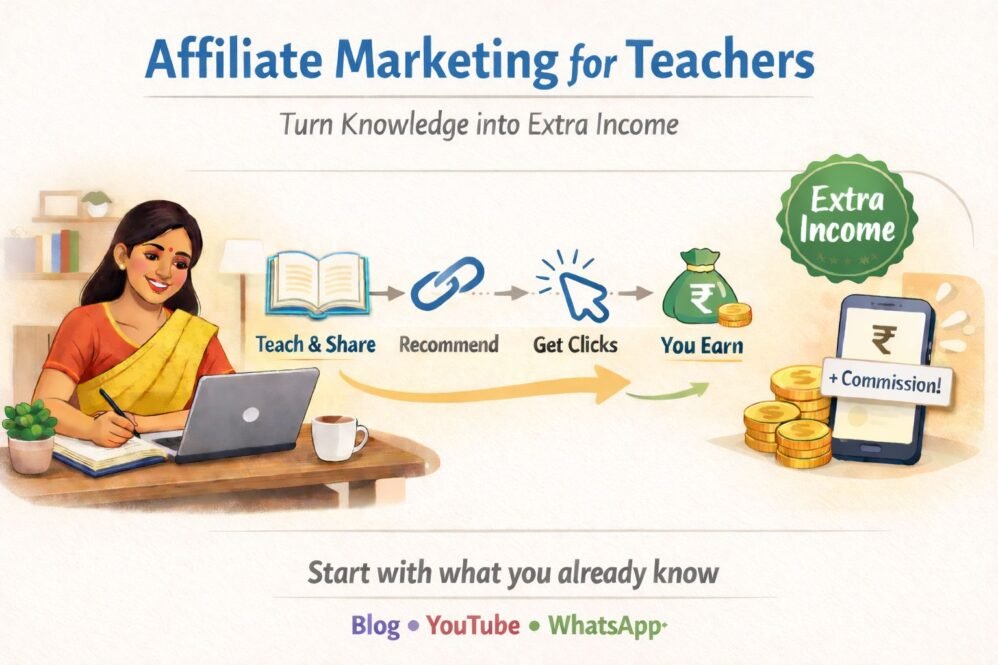
The affiliate marketing process follows a clear sequence. First, you join an affiliate program offered by a company or marketplace. You receive a unique tracking link. You share that link in your content – a blog post, video, email newsletter, or social post. When someone clicks your link and completes a purchase, the platform records the transaction and credits your account with a commission.
Most programs use cookies (small data files) to track clicks for 24 to 90 days. This means even if someone clicks your link but buys a day later, you can still earn the commission.
Payments are usually made monthly, once you reach a minimum threshold – often between ₹1,000 and $50, depending on the platform and currency.
Benefits and Drawbacks
Benefits
Low startup cost. Most affiliate programs are free to join. You only need a platform – even a free blog works to start. Flexible schedule. You write or record content on your own time, which fits a teacher’s workday. Content earns commissions long after it is published.
Drawbacks
Income is not guaranteed. You earn only when someone buys. The early months may yield little to no income, but as your audience grows, the probability of earning increases. Disclosure is mandatory. Indian law (under ASA/ASCI guidelines) and the U.S. FTC both require you to clearly disclose affiliate relationships to your audience. Skipping this can result in penalties.
Pricing and Cost Overview
Starting affiliate marketing has a very low financial barrier. Here is a realistic breakdown of what teachers might spend to get started:
| Item | Cost Range | Notes |
|---|---|---|
| Blogging platform (e.g., WordPress.com) | ₹0 – ₹600/month | Free tier available; paid plans unlock custom domains |
| Domain name | ₹800 – ₹1,200/year | The free tier is sufficient for beginners |
| Email marketing tool | ₹0 – ₹1,200/month | Mailchimp offers a free tier up to 500 contacts |
| Canva (graphics) | ₹0 – ₹4,000/year | Free tier is sufficient for beginners |
| Online course (optional) | ₹500 – ₹5,000 | Not required; many free tutorials exist |
A teacher can realistically start for under ₹1,000 using free tools, a free blog, and organic social media traffic.
Comparison of 10 Affiliate Programs Relevant for Teachers
Below is a neutral comparison of programs that align well with education-related content.
| Program | Commission Rate | Cookie Duration | Relevant Niche |
|---|---|---|---|
| Amazon Associates India | 0.5% – 9% | 24 hours | Books, stationery, tech |
| Teachers Pay Teachers | Up to 85% (own resources) | N/A (own store) | Teaching resources |
| Coursera Affiliates | Up to 45% | 30 days | Online learning |
| Udemy Affiliates | 10% – 15% | 7 days | Online courses |
| Canva Affiliates | Up to 80% first month / 25% recurring | 30 days | Design tools, education |
| Skillshare Affiliates | $7 per trial signup | 30 days | Creative skills, teaching |
| Grammarly Affiliates | $0.20/free signup, $20/paid | 90 days | Writing, student tools |
| NordVPN Affiliates | Up to 40% | 30 days | Online safety for students |
| Notion Affiliates | Up to 50% | 90 days | Productivity, planning |
| ShareASale Network | Varies by merchant | Varies | Broad range – education, books |
Rates and terms change. Always verify details on each program’s official page before joining.
What to Avoid and Red Flags
U.S. FTC Disclosure Guidelines for Influencers and Affiliates
Programs that charge you to join are a red flag. Legitimate affiliate programs are free. Unrealistically high commission promises (like 90%+ on physical goods) are also a warning sign. Walk away from any program that pressures you to recruit others to earn – that is a multi-level structure, not true affiliate marketing.
Avoid promoting products you have never used or cannot vouch for. Your audience’s trust is your most valuable asset. Once lost, it is very hard to rebuild.
Where to Sign Up and Get Started
Amazon Associates India – Official Sign-up Page
Start by choosing one niche – for example, classroom technology, teacher productivity tools, or children’s books. Then create content around that topic. Sign up for one or two affiliate programs that match. Publish content consistently for at least three months before expecting meaningful income.
Platforms like WordPress, Blogger, or a YouTube channel all work well. Social media pages on Instagram or Pinterest can also drive affiliate traffic, especially for visual content like classroom setups or reading lists.
Who It Is For and Who It Is Not
Affiliate marketing suits teachers who enjoy creating content – writing, recording, or teaching online. It works best for those with at least a small existing audience, even if it is just a classroom newsletter or a social following of a few hundred people.
It is not well-suited for anyone expecting quick results. Building consistent commissions usually takes six months to a year of regular content creation. Teachers who prefer not to share their professional life publicly may also find it uncomfortable.
Geographic and Local Considerations
Teachers in India should note that affiliate income is taxable under “income from other sources” as per the Income Tax Act. You may need to declare this income when filing your ITR. Keep records of all commissions earned. For teachers outside India, check your country’s tax rules for freelance or supplemental income from online platforms.
Some programs pay only in USD via PayPal or bank transfer. Verify that the payment method works for your location before investing time in a program.
Frequently Asked Questions
Q1. Do I need a website to start affiliate marketing as a teacher?
No, a website is helpful but not required. Many teachers start with a YouTube channel, an Instagram page, or even a Facebook group. A blog does make it easier to rank in search engines over time, which helps grow a steady audience.
Q2. How much can a teacher realistically earn from affiliate marketing?
Income varies widely based on traffic, niche, and effort. Many beginners earn ₹500 – ₹5,000 per month in their first year. With a larger, engaged audience, some content creators earn ₹20,000 – ₹1,00,000+ monthly. There is no standard or fixed amount, and results depend on consistent content and audience growth.
Q3. Are there any rules about disclosing affiliate links?
Yes, disclosure is mandatory. In India, the Advertising Standards Council of India (ASCI) requires clear disclosure whenever a financial relationship exists. Simply adding “#ad” or “affiliate link” near the recommendation is the standard practice. Failing to disclose can result in reputational damage and regulatory attention.
Q4. Can I do affiliate marketing while still working full-time as a teacher?
Yes. Many affiliate marketers run their activities alongside a regular job. Content can be created on weekends or school holidays. The key is to set a realistic schedule and treat it as a long-term project rather than a quick side task.
Q5. What niche works well for a teacher doing affiliate marketing?
Education-related niches tend to perform well for teachers because they bring genuine expertise. These include children’s books, classroom supplies, online learning platforms, teacher productivity apps, and homeschooling resources. Choosing a niche you know well builds audience trust faster.
Final Thoughts
Affiliate marketing offers teachers a structured way to build supplemental income around their existing knowledge and credibility. The process requires consistent content creation, honest promotion, and patience. There is no shortcut – but the effort compounds over time as older content continues to drive commissions.
The clearest next step is to pick one platform, choose one niche you know well, and join one affiliate program. Publish five to ten pieces of genuinely useful content before expecting results. Track what works, and build from there.
Your classroom expertise is more valuable than you might think – affiliate marketing is simply one way to share it beyond four walls.
Further Reading
ASCI Code of Advertising – Official Guidelines for Disclosure in India
WordPress.com – Start a Blog (Official Platform Guide)
If you want to learn Affiliate Marketing – Step by Step, or even want to have a quick discussion about it, then reach out to me or connect with the team.